






Back to Blog
Air Purifier for Germs: How to Protect Your Home This Back-to-School Season

Start shopping to qualify for free shipping!
This website uses cookies to improve your experience. By continuing to use our website you are consenting to our cookie policy.
Every September, the same thing happens. The kids go back to school, and within a few weeks, someone in the house is sniffling. It's such a familiar pattern that it barely raises an eyebrow, but there's a reason for it. Term time turns classrooms, buses and canteens into a melting pot of germs, mixing dozens of households' worth of colds, coughs and bugs in one shared space, then sending it all home again in a school bag.
It's exactly why searches for an air purifier for germs tend to climb every autumn. Parents are looking for a practical way to support cleaner air at home during the months when illness moves fastest through the household. Here's what's really behind the back-to-school germ surge, which Blueair products suit which room and the other air quality issues worth knowing about at the same time.
Over the summer holidays, children spend far less time in large, mixed indoor groups. Term time reverses that overnight. Classrooms, school buses, dining halls and after-school clubs bring together children from dozens of different households, each carrying whatever they've picked up over the break or from a sibling at another school.
Add close contact, shared surfaces and indoor spaces that aren't always well ventilated, and it's a near-perfect environment for colds and seasonal bugs to spread quickly. Once one child brings something home, it's rarely long before the rest of the family is dealing with it too.

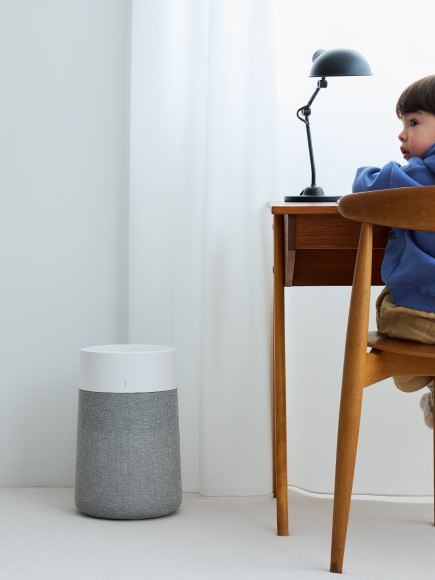
A good air purifier won't stop children picking up germs at school, but it can support cleaner air in the rooms where a family spends the most time once they're home. Every model in the Blue Signature range uses seven-stage HEPASilent filtration, capturing at least 99.97% of airborne particles down to 0.1 microns, which includes the fine droplets and dust that bacteria and viruses can attach to. That's on top of OdorFence odour removal and smart particle sensing, so the unit adjusts itself rather than needing to be watched.
The three sizes exist because a purifier only works efficiently when it's matched to the room. Undersize it and it has to run flat out to cope; oversize it and you're paying for capacity you don't need.
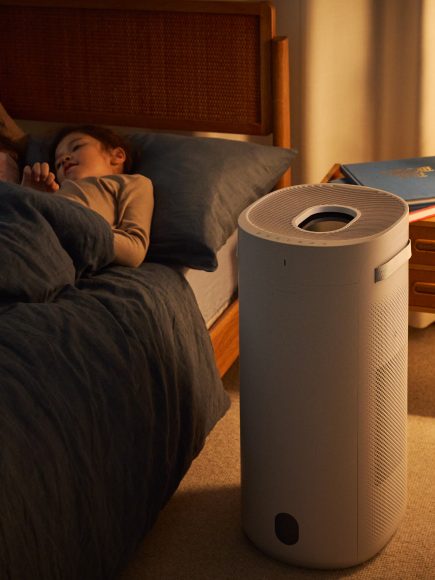
For a child's own room specifically, the Mini Restful is worth calling out on its own. It combines HEPASilent filtration with a sunrise alarm clock, so it's doing two jobs during back-to-school season: keeping the air in a bedroom cleaner overnight, and making early school mornings a gentler wake-up with a gradual sunrise and a choice of sounds rather than a jarring alarm.
It's QuietMark certified at just 18 dB on its lowest setting, so it runs through the night without disturbing sleep, and it covers rooms up to 31 m², which suits most children's bedrooms. It's a natural product to feature alongside the germs angle, since better air quality and an easier start to the school day are both part of the same back-to-school routine.
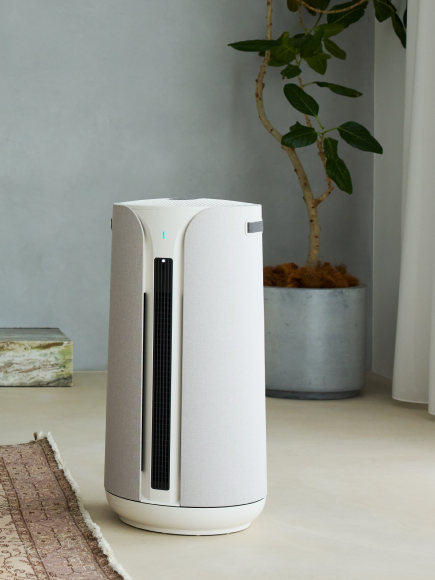
Most households will get everything they need from the Blue Signature range, but it's worth a brief mention of Blueair's premium Classic Pro range for the households that ask for more, whether that's several school-age children bringing home different bugs at once, a large open-plan home, or simply extra reassurance during the germiest months of the year. Both the CP7i and CP9i use Blueair's patent-pending HINS lighting technology, which shines a safe, low-intensity blue light onto the filter at intervals to help deactivate viruses and bacteria trapped there, on top of the same HEPASilent filtration used across the range.
These are a considerably bigger investment than the Blue Signature or Mini Restful, so they're not a fit for most back-to-school searches, but they're worth flagging as an option for larger households or anyone asking specifically about virus deactivation rather than filtration alone.

The germ surge is the headline reason searches spike this time of year, but it's rarely the only thing affecting air quality at home during term time. A few others
worth knowing about:
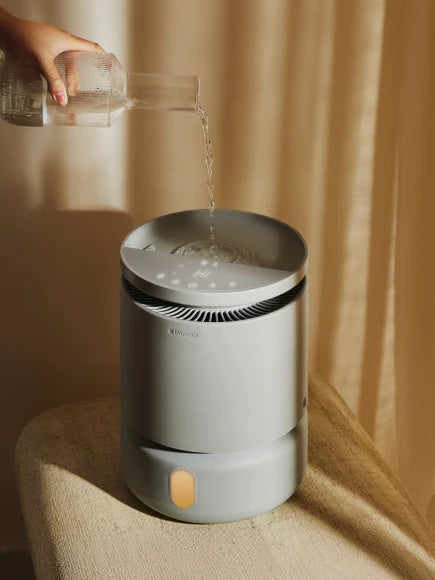
As the heating comes on for the colder months, indoor air dries out, and that dryness can make things worse once a cold does arrive. Dry air irritates the throat and airways and can trigger coughing, while thin, dry mucus is harder for the body to clear than moist mucus, so congestion can feel worse overnight. Blueair's own guidance points to keeping indoor humidity around 40-50%, both to help ease congestion when illness strikes and to stop skin and airways drying out over winter more generally.
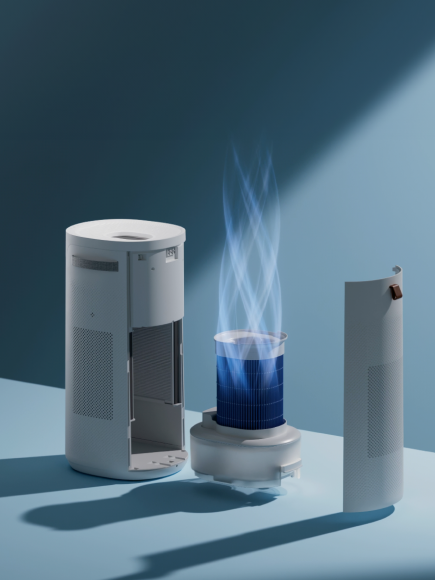
This is where a humidifier such as the DreamWell earns its place alongside a purifier during back-to-school season, particularly in a bedroom where a child is already fighting off their first cold of term. Blueair also offers a combined 2-in-1 purifier and humidifier for larger rooms, worth a look via the humidifier collection for households that want both jobs done by one unit.
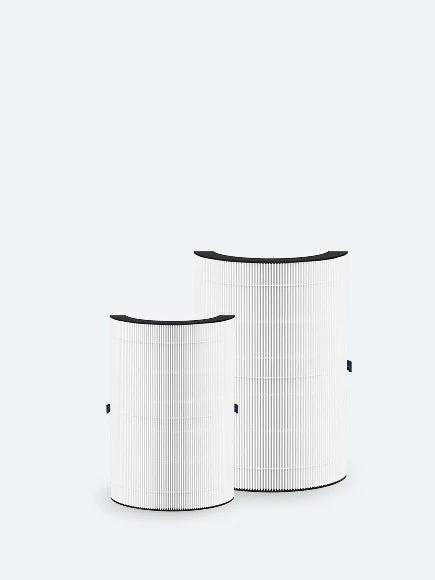
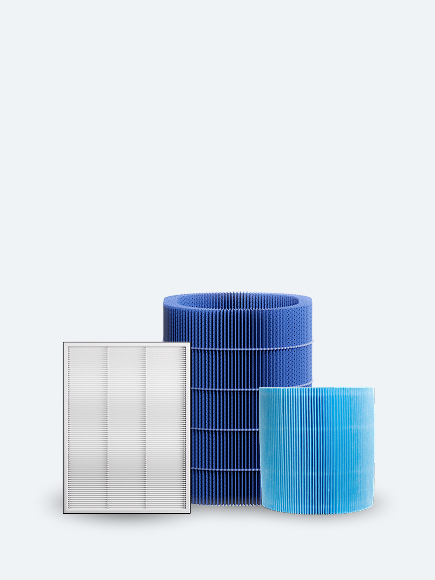
Everything above depends on the filter itself still being in good condition. Blueair filters typically last around 9 to 12 months under normal indoor conditions, with the RealTrack algorithm tracking actual usage, including local pollution levels, hours run and fan speed, so the control panel's indicator turns red when a replacement is genuinely due rather than on a fixed calendar date.
For a lot of households, a purifier gets bought or dusted off in spring for hay fever season, which means the filter is often approaching, or past, that 9 to 12 month mark right around the time term starts again in September. A saturated filter is simply less able to capture the fine particles this article has been talking about throughout, including the droplets that bacteria and viruses attach to, so it undermines the exact benefit a parent searching for an air purifier for germs is after.
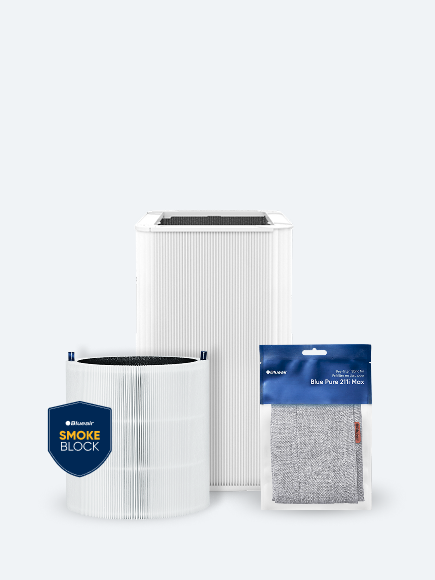
It's worth building a quick filter check into the back-to-school routine alongside the uniform and stationery shop, whether that's the Blue Signature filters, the Classic Pro CP7i filter, or browsing the full filters range to find the right one.

Back to school will always bring a bit of a germ surge. It's what happens when so many households mix together in shared indoor spaces after a summer apart. The bit within a family's control is what happens once everyone's home again: keeping some ventilation going, giving new kit a chance to air out, matching the right Blueair purifier to each room and running a humidifier alongside it if congestion strikes, so the air indoors is doing as much as it reasonably can while term time works its way through the household.