








Air Purifiers
46 results
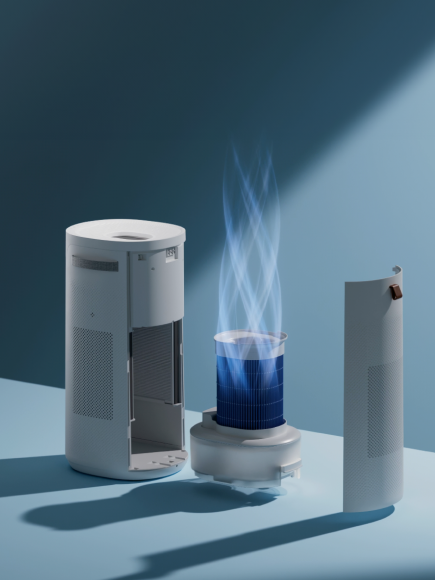
Discover our range of HEPASilent™ technology air purifiers, delivering maximum filtration with minimum noise.

-

-

-

-

-

-

-

-

-

-

-

-

-

-
 Air Purifier, Sunrise Alarm ClockColor: Coastal Beige
£169.00£144.00 -
 Air Purifier, Sunrise Alarm ClockColor: Midnight Blue
£169.00£144.00 -

-

-

-

-

-
 Air Purifier, Extra-large RoomsColor: Nordic Fog
£443.00£376.00 -
 Air Purifier, Extra-large RoomsColor: Midnight Blue
£443.00£376.00 -

-

-

-

-
 Air Purifier, Sunrise Alarm ClockColor: Coastal Beige
£338.00£224.00 -
 Air Purifier, Sunrise Alarm ClockColor: Midnight Blue
£338.00£224.00 -

-

-

-

-

-

-
 Heat, Cool, Purify, Small Rooms
£448.00£399.00 -

-

-

-

-

-

-

-
 Air Purifier, Extra-large RoomsColor: Nordic Fog
£538.00£379.00 -
 Air Purifier, Extra-large RoomsColor: Midnight Blue
£538.00£379.00 -

-


-
Air Purifiers for Cleaner, Healthier Indoor Air
The air inside your home can carry two to five times more pollutants than the air outside, according to the EPA. Dust, pollen, pet dander, smoke, and fine particles circulate every time you open a door, run the heat, or live with a pet. A good air purifier pulls them out.
Blueair has been building air purifiers since 1996 in Sweden, and in 2025, Consumer Reports top-rated air purifiers named us the best air purifier brand of the year. Every purifier in this collection runs on HEPASilent technology, a filtration approach that pairs mechanical and electrostatic filtration to capture more particles with less noise and lower energy use than standard HEPA alone.
Whether you need something for a bedroom, a living room, a large open floor plan, or a home dealing with allergies and pets, there’s a model sized and designed for that space below.
Find the right purifier for your space
Blueair air purifiers are organised by the room size they’re designed to clean:
Small rooms under 25 M² — bedrooms, offices, nurseries, and small dens. Quiet, compact, and built to run overnight without disrupting sleep.Medium rooms 25–40 M² — most living rooms and primary bedrooms fall here. Models in this range offer a balance of coverage, price, and noise.
Large rooms over 40 M² — open-plan kitchens, great rooms, and studio apartments. Browse our air purifiers for large rooms with high CADR ratings for faster air turnover and cleaner spaces.
Extra-large rooms over 60 M² — the Blue Signature series handles spaces up to 92+ M². If you have high ceilings or an open layout, these are the ones to look at.
Room sizes listed with each model are based on running the purifier at medium speed for two full air changes per hour, the standard used by Consumer Reports and AHAM. Run at high speed, most models cover an even larger area.
What HEPASilent filtration actually means
Most air purifiers use a True HEPA filter, which captures 99.97% of particles 0.3 microns or larger. That’s the industry benchmark, and it works.
Blueair’s HEPASilent technology does something different. It adds an electrostatic charge to incoming air particles, which makes them stick to the filter more easily. The result: the same level of filtration at a lower fan speed, which means less noise and lower electricity use. At high speeds, HEPASilent purifiers clean more air per minute than a standard HEPA unit of the same size.
In Consumer Reports’ lab tests, Blueair models consistently perform well at both high and low speeds — which matters because most people run their purifier on low most of the time.
CADR (Clean Air Delivery Rate) is the metric that tells you how fast a purifier removes dust, pollen, and smoke from a given space. Higher CADR means faster clean air delivery. Every model on this page lists its CADR rating so you can compare directly.
Air purifiers for allergies, pets, and respiratory conditions
Cat and pet dander is one of the most common indoor allergens. The proteins in pet saliva and skin attach to tiny airborne particles that stay suspended in the air for hours. A HEPA-grade purifier running continuously in the rooms where your pet spends the most time, especially the bedroom, can cut down dander and make life with a cat or dog much more manageable for people with allergies.
Pollen, dust mites, and mould spores follow the same logic. They’re small, they float, and they don’t settle quickly. An air purifier with a high CADR for the room size you’re targeting will cycle the air several times per hour, reducing the concentration of particles that trigger sneezing, watery eyes, and congestion.
For people managing respiratory conditions, such as asthma, COPD, or pulmonary fibrosis, air purifiers won’t replace medical treatment, but cleaner air with fewer airborne irritants means fewer triggers. People with pulmonary fibrosis and COPD are often advised to reduce exposure to airborne dust, smoke, and fine particles. Running a purifier in the bedroom and main living area is one of the more direct ways to do that at home.
Browse best air purifiers for allergies to see models best suited for allergy households, including options with activated carbon filters that also help with odours from pets, cooking, and cleaning products.
The best air purifier for your bedroom
The bedroom gets its own section because it’s where most people want the most coverage. You’re sleeping there for 7–8 hours, breathing the same air the entire time.
A few things matter specifically for bedroom use: noise, size, and whether the purifier can run all night safely.
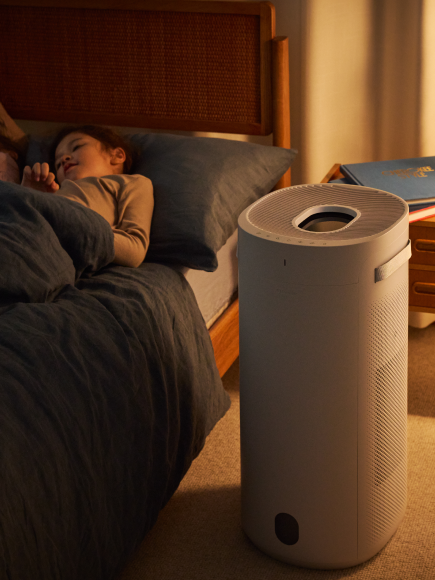
Looking for the best air purifier for bedroom use? Blueair’s sleep models run quietly on their lower settings, typically under 30 dB, which is close to a whisper. The Mini Restful is designed specifically for sleep, pairing HEPA-grade air purification with a built-in sunrise alarm clock that simulates natural light to help you wake more gradually.
Running an air purifier all night is completely fine and, for people with allergies or respiratory sensitivities, it’s actually the most effective approach. Air quality is typically at its lowest in the early morning hours when outdoor air mixes with indoor air. Keeping the purifier running overnight maintains cleaner conditions continuously.
For most bedrooms, a small or medium model is the right size. The bedroom-specific models on this page are clearly labelled, and each listing shows the square footage coverage so you can match it to your room.
Air purifiers for large rooms and open floor plans
Large and extra-large spaces are where most air purifiers underperform. A unit rated for 28 m² placed in a 65 m² living room will work, just not very well. The air turnover rate drops, so the same particles stay airborne longer.
For large rooms, look at CADR first. A CADR of 250 for smoke, for example, means the purifier removes the equivalent of 250 cubic feet (about 7 m³) of smoke-free air per minute. In a 56 m² room with 2.7 m ceilings, that's roughly two full air changes per hour at high speed.
The Blue Pure 211i Max and Blue Pure 3450i Max are built for exactly these spaces. They handle up to 56–93+ m² without working at maximum output constantly, which keeps noise low and extends filter life.
Shop by what you need
Allergy Solutions — Optimised for dust, pollen, and pet dander with high CADR ratings and activated carbon pre-filters.
Sleep Collection — Quieter operation, sleep-friendly design, and the Mini Restful with its built-in sunrise alarm clock.
2-in-1 Purify + Humidify — Need a 2-in-1 air purifier and humidifier in a single unit? This collection is co-developed with health experts for dry climates and winter months.
ComfortPure 3-in-1 — Purifies, heats, and cools in one device, so you’re not running three separate appliances.
Portable Models — Lightweight units you can move between rooms. Useful if you want clean air in a home office during the day and your bedroom at night.
Why Blueair
Named the best air purifier brand by Consumer Reports in 2025. That rating is based on independent lab testing across dust, pollen, and smoke removal at multiple speeds, plus reliability data from owner surveys.
FSA and HSA eligible. Blueair air purifiers qualify as an eligible medical expense under most FSA and HSA accounts, which means you can use pre-tax dollars to pay for them.
30-day home trial. Every purifier comes with a 30-day trial period. If it doesn’t do what you need it to do in your home, you can send it back.
Smart app with real-time air quality monitoring. Most Blueair models connect to the Blueair app, which shows live indoor air quality data, lets you set schedules, and alerts you when filters need replacing.
Shop air purifiers by room size | What is HEPASilent technology | Removing toxins from indoor air
Frequently asked questions
How do I know when to replace my Blueair filter?
The Blueair app tracks runtime and air quality data to tell you when replacement is actually needed. Most filters last 6 months under normal use. Filter subscription through Blueair saves 15% and keeps you from running on a clogged filter.
What is the 2-3 rule for air purifiers?
The 2-3 rule refers to the number of air changes per hour a purifier should achieve in your room. Two to three complete air changes per hour is the standard recommendation for allergy and asthma sufferers. To calculate whether a purifier meets this for your room: multiply your room’s square footage by your ceiling height to get cubic feet, then check whether the purifier’s CADR supports 2–3 full cycles per hour. Blueair product pages include room coverage based on this standard.
Is there a downside to using an air purifier?
The main costs are electricity and replacement filters. Blueair models are designed to be energy-efficient — most use less power than a standard light bulb on low settings. Filter replacement costs vary by model, typically ranging from £20 to 100 per year, depending on the unit and how often you run it. The Blueair app alerts you when filters actually need changing rather than on a fixed schedule, which helps avoid replacing them too early.
Do air purifiers help with pulmonary fibrosis?
Avoiding airborne irritants is often part of managing pulmonary fibrosis. Dust, mold spores, and fine particles can aggravate symptoms, and a HEPA-grade air purifier running in the main living spaces and the bedroom can reduce exposure to these. As with any respiratory condition, speak with your pulmonologist about what’s right for your specific case.
Would an air purifier help with COPD?
Reducing airborne irritants, such as dust, smoke, fine particles, and pollutants, is generally recommended for people with COPD. An air purifier won’t treat the condition, but it can lower the concentration of triggers in the home. Consult your doctor about which filtration level is appropriate for your situation.
Is it okay to sleep with an air purifier on all night?
Yes, and for most people with allergies or sensitivities, running it all night is the better approach. Blueair bedroom models run quietly enough (under 30 dB on low) that they don’t disrupt sleep. There’s no health risk from leaving a quality air purifier running overnight.
Do air purifiers help with sleep apnoea?
Air purifiers don’t treat sleep apnoea directly; that’s a structural and neurological issue that requires medical evaluation. What they can do is reduce airborne allergens and irritants that cause nasal congestion, which can worsen sleep apnoea symptoms. Cleaner air means less obstruction from inflammation, which some sleep apnoea patients find helpful alongside their primary treatment.
Is it possible to live with a cat if you are allergic?
Many people do. The most effective strategies combine regular cleaning (vacuuming with a HEPA vacuum, washing bedding frequently), keeping the cat out of the bedroom, and running a high-quality air purifier continuously in the rooms the cat uses most.
Do air purifiers work for cat allergies?
They help substantially. Cat allergens (Fel d 1 protein) bind to fine airborne particles that can stay suspended in the air for hours. A HEPA-grade air purifier running in the rooms where your cat spends the most time, especially the bedroom, reduces the airborne concentration of these particles. It won’t eliminate the allergen entirely, but most people with cat allergies notice a meaningful difference. See Blueair’s air purifiers for allergies for models optimised for pet households.
Is there an air purifier that actually works?
Yes. Air purifiers with true HEPA or HEPASilent filters capture particles as small as 0.1 microns, including dust, pollen, pet dander, smoke, and many airborne bacteria. Consumer Reports lab testing confirms that the best-performing models can reduce airborne particles significantly within an hour in a properly sized room. The key is matching the purifier’s CADR to your room size and running it continuously.
What air purifier does Consumer Reports recommend?
Consumer Reports has recommended multiple Blueair models, including the Blue Pure 211i Max for large rooms, the Blue Pure 3450i Max for large spaces, and the Mini Restful for small rooms and sleep. Blueair was also named the best air purifier brand overall for 2025.
Which brand is best for air purifiers?
Consumer Reports awarded Blueair the title of best air purifier brand in 2025, based on performance across multiple models, owner satisfaction scores, and predicted reliability. Blueair has been building air purifiers in Sweden since 1996.
What is the #1 air purifier?
Consumer Reports has consistently ranked Blueair models among the top performers across room sizes. The Blue Pure 211i Max, Blue Pure 3450i Max, and Blue Signature are among the top-rated options for large and extra-large rooms.
What is the most highly recommended air purifier?
Consumer Reports named Blueair the best air purifier brand of 2025 after independent lab testing. Several Blueair models received CR Recommended status, including the Blue Pure 211i Max for large rooms and the Mini Restful for small rooms and sleep use.
How do I choose a good air purifier?
Match the purifier to the room size first. Check the CADR rating — higher is better for faster filtration. For allergies, look for true HEPA or HEPASilent filtration. For odours and smoke, activated carbon filters help. If the bedroom is your priority, look for a model with a low noise rating on its lower settings. Blueair’s collection is organised by room size, which makes it easier to narrow down.