












Back to Blog
When the clocks go back: how to keep your winter mornings on track

Start shopping to qualify for free shipping!
This website uses cookies to improve your experience. By continuing to use our website you are consenting to our cookie policy.
The clocks go back at 2am on Sunday 25 October 2026, and most of us will enjoy an extra hour in bed. For a few weeks after that, mornings are a little lighter. But the days keep shortening, and by December winter mornings mean getting up long before the sun does.
When the clocks go back is the perfect moment to set up a routine that will carry you through to spring. Here's what changes, and how to make winter mornings easier.
The clocks go back one hour at 2am on Sunday 25 October 2026, turning 2am into 1am. British Summer Time ends and the UK returns to Greenwich Mean Time until the clocks go forward again in March.

The evenings change first. Straight after the clocks go back, it gets dark around an hour earlier, often before most of us have left work. Mornings get brighter for a short while, then the later sunrises catch up through November and December.
Your body clock likes routine, and light is one of the strongest signals it uses to tell morning from night. In summer, daylight is often streaming in by the time your alarm goes off. On winter mornings, you wake to a dark room without sunlight acting as the cue that it's time to get going. This is why getting up in the morning can feel so different in December than it did in June.
One of the simplest ways to make getting up easier is to wake up at the same time every day: summer or winter, weekday or weekend. A steady routine helps your body know when to feel alert and when to wind down, so you're not resetting yourself every Monday.
When the clocks go back, resist using the extra hour for a long lie-in. Get up at your usual time on Sunday 25 October and let the new schedule settle in from day one.

Blueair Mini Restful brings the sunrise to you, whatever time sunrise is outside. By combining a sunrise alarm with an air purifier, you get one compact unit on your bedside table that helps you wake gently and breathe cleaner air throughout the night.
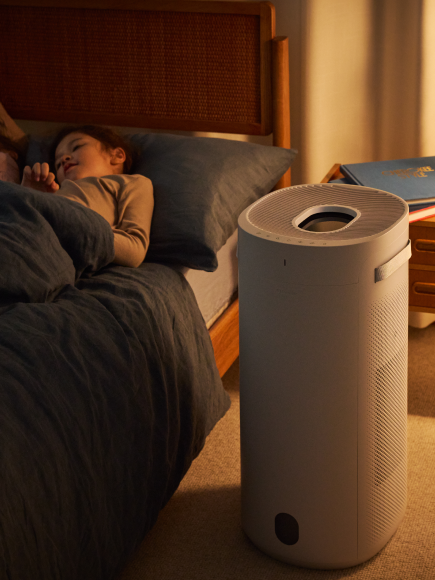
Setting the clocks back usually lines up with switching the heating on and the windows staying closed until spring. Dust, pet dander and other particles build up indoors, and central heating can leave the air feeling dry by morning. While an air purifier keeps on top of the particles keeping your air clean, if your room feels dry, a humidifier such as the Blueair DreamWell can help bring the moisture back.

When the clocks go back, it's the start of the darker half of the year, but it doesn't have to mean months of dragging yourself out of bed. Keep the same wake-up time all year, let the light do the work and give your bedroom air some attention.
Discover Blueair Mini Restful and start every winter morning with a sunrise.
Q: When do the clocks go back in 2026?
A: At 2am on Sunday 25 October 2026, when the clocks go back one hour to 1am.
Q: Are mornings lighter or darker when the clocks go back?
A: Lighter at first. Sunrise moves an hour earlier by the clock, but it keeps getting later through November and December, so winter mornings soon feel dark again.
Q: How long does it take to adjust when the clocks go back?
A: Most people settle within a few days to a week. Shifting your routine gradually and getting morning light can help.
Q: What is a sunrise alarm clock?
A: A sunrise alarm clock, sometimes called a wake-up light, gradually brightens before your alarm time, so you wake to light rather than to a dark room.
Q: Can a sunrise alarm also clean the air?
A: Blueair Mini Restful does both. It pairs a sunrise alarm and night light with HEPASilent filtration, so it purifies the air in your bedroom while you sleep.