






Back to Blog
Clean Air Month: The Air Inside Your Home is More Polluted Than You Think

Start shopping to qualify for free shipping!
This website uses cookies to improve your experience. By continuing to use our website you are consenting to our cookie policy.
Every May, Clean Air Month reminds us to pay attention to the air we breathe. Most people immediately picture traffic fumes and factory chimneys. But the air quality story that matters most to your health is unfolding right now, inside your own four walls.
According to the UK Health Security Agency, most of us spend around 90 per cent of our time indoors. Our homes, offices and schools feel like safe havens from the polluted world outside, yet the air within them can contain concentrations of pollutants that are two to five times higher than outdoor air. Sometimes significantly more.
This Clean Air Month, we want to change the conversation.
Because understanding indoor air quality is the single most actionable step the average person in Britain can take to protect their lungs, their sleep and their long-term health. Consider the following:
Clean Air Month is an annual awareness campaign observed every May across the UK and internationally. Founded to raise public awareness about the health impacts of air pollution, it encourages individuals, organisations and policymakers to take meaningful action. From school programmes to government campaigns, Clean Air Month shines a light on a public health issue that is all too easy to ignore because air, by its very nature, is invisible.
In the UK, Clean Air Month aligns with broader efforts to meet legal air quality targets and reduce the burden of respiratory disease. It is backed by organisations including the British Lung Foundation, environmental
charities and local councils running clean air zones in cities from London to Birmingham.
For Blueair, Clean Air Month is not just an occasion to raise awareness. It is a call to action for every household in Britain to think carefully about the quality of the air their family breathes every single day.

The sources of indoor air pollution are surprisingly ordinary. Cooking on a gas hob, lighting a candle, spraying a cleaning product, or simply opening a window near a busy road can all introduce harmful particles
and gases into your living space. The pollutants most commonly found in UK homes include:
Microscopic particles less than 2.5 micrometres in diameter, produced by cooking, candles, wood-burning stoves and traffic fumes drifting in from outside. These are small enough to penetrate deep into the lungs and even
enter the bloodstream.
Released by gas cookers and boilers. Prolonged exposure is linked to respiratory inflammation and worsened asthma symptoms.
Emitted by paints, varnishes, cleaning sprays, air fresheners and synthetic fabrics. Many VOCs are known irritants; some are carcinogenic with long-term exposure.
Pet dander, dust mite faeces and mould spores are among the most common triggers of allergic rhinitis, eczema and asthma in the UK.
A colourless, odourless gas produced by faulty boilers, gas fires and open fires. Even at low concentrations it causes headaches, fatigue and cognitive impairment.
Our national habit of keeping windows shut for much of the year is entirely understandable given the British weather. But it creates a problem. Homes, particularly older Victorian and Edwardian properties that have
been draught-proofed and double-glazed, can trap pollutants inside for hours. Modern new-build homes, while energy-efficient, are often built with extremely low air exchange rates, meaning pollutants generated indoors have little opportunity to escape.
Add to this the growing popularity of wood-burning stoves, which produce significant quantities of fine particulates, and the picture becomes concerning. A 2023 report from the UK Department for Environment, Food
and Rural Affairs found that domestic wood burning now accounts for a substantial proportion of fine particle emissions in urban areas, with indoor concentrations in homes with open fires often far exceeding safe limits.

Poor indoor air quality rarely announces itself dramatically. Its effects tend to be subtle, chronic and easily attributed to other causes. If you or a family member regularly experience any of the following, indoor air pollution could be a contributing factor:
Low-level carbon monoxide and VOC exposure interferes with oxygen uptake and cognitive function, leaving you feeling drained even after a full night's sleep.
A classic sign that something is off with the air in your bedroom overnight, where CO₂ and VOCs can build up significantly in an unventilated room.
If your hay fever or asthma symptoms are at their worst indoors, mould spores, dust mites and pet allergens could be the culprit rather than outdoor pollen.
Elevated CO₂ levels, a natural byproduct of breathing in an enclosed space, are linked to reduced sleep quality, restlessness and poor memory consolidation.
Clean Air Month is the perfect prompt to take stock of your home environment. Here are the most effective actions you can take right now:
Open windows for at least fifteen minutes each morning, ideally on opposite sides of your home to create cross-ventilation. If you live within 50 metres of a busy road, try to ventilate in the early morning or late evening when traffic levels are lower, and avoid opening windows during peak cooking times when outdoor NO₂ is highest.
Run your kitchen extractor fan every time you cook, and keep it running for at least ten minutes after you finish. Gas hobs in particular produce significant spikes in NO₂ and fine particles. If your extractor fan does not vent to outside but simply recirculates air, consider replacing the filter or upgrading to a ducted model.
Many conventional air fresheners, scented candles and fabric sprays release a cocktail of VOCs into your home. Switch to unscented cleaning products where possible, and if you enjoy candles, choose natural beeswax or soy alternatives with cotton wicks, which produce significantly fewer particulates than paraffin-based candles.
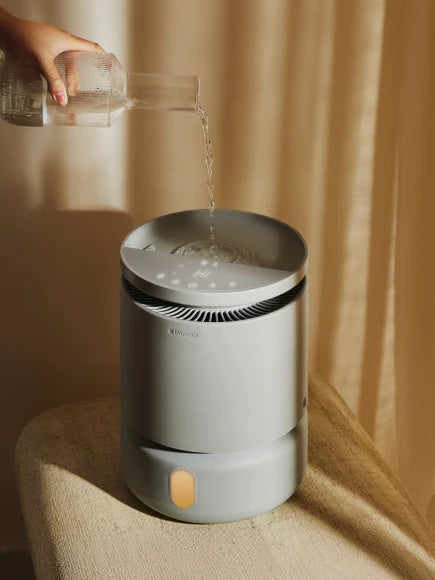
Mould is one of the most serious indoor air quality threats in British homes, particularly in older properties and those with inadequate heating or insulation. Do not simply wipe mould away without addressing the underlying moisture issue. Dehumidifiers can help in bathrooms and kitchens, and improving thermal insulation prevents the cold surfaces on which condensation forms.
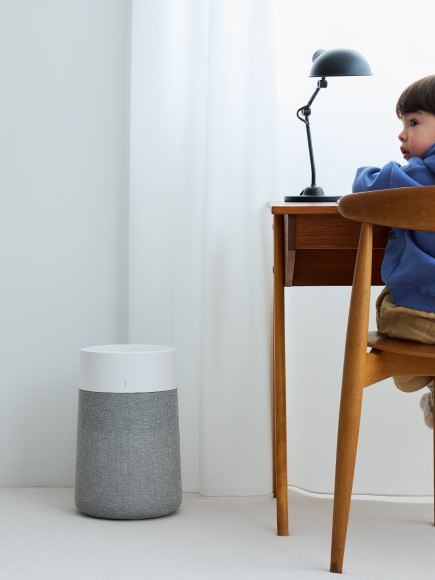
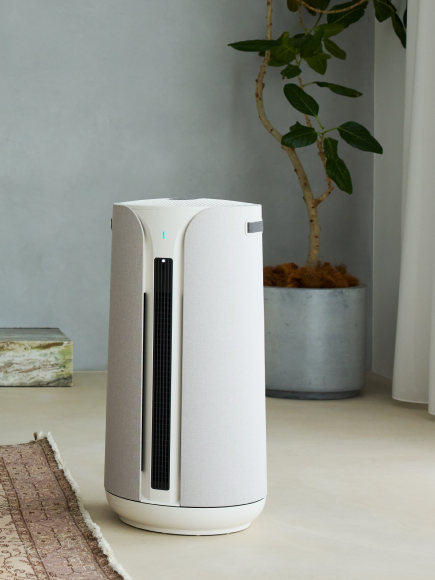
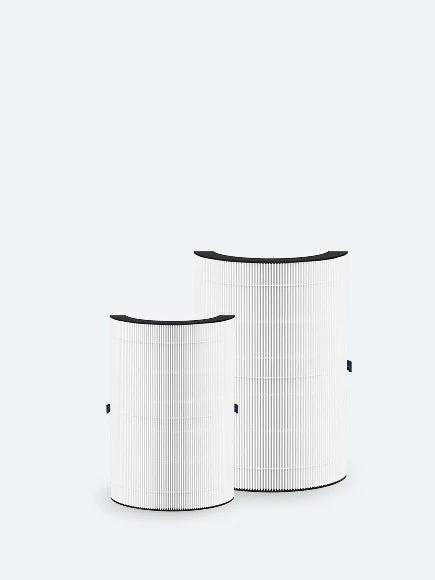
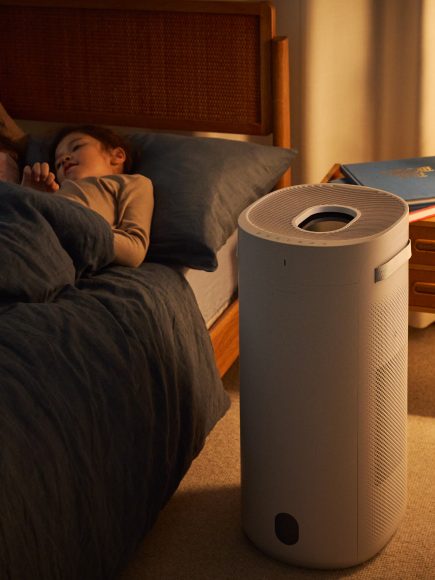
Even with excellent ventilation habits, some pollutants are simply too persistent or too fine to be removed by opening a window. A high-quality air purifier fitted with a true HEPA filter and an activated carbon stage captures the particles, allergens and VOCs that ventilation alone cannot address. For bedrooms in particular, running an air purifier overnight can meaningfully improve sleep quality and morning well-being.

Blueair's proprietary HEPASilent technology combines electrostatic and mechanical filtration to capture 99.97% of airborne particles down to 0.1 microns, including PM2.5, pollen, pet dander, bacteria and mould spores.
Unlike conventional HEPA filters that require high fan speeds to be effective, HEPASilent works efficiently at lower speeds, meaning it runs more quietly and uses less energy while still delivering cleaner air throughout the room.
Across Blueair's full product range, from the compact Blue Pure 3250i Max to the powerful Classic Pro, every purifier is independently tested and certified to deliver measurably cleaner air in your home.
The World Health Organisation estimates that air pollution is responsible for approximately 7 million premature deaths globally each year, with indoor air pollution accounting for a significant share of that burden. In
the UK, the picture is improving outdoors, thanks to decades of regulation and the decline of coal-burning industries. But indoor air quality has received far less attention, from policymakers and consumers alike.
Clean Air Month exists to change that. It is an invitation to look inward, quite literally, and to take seriously the quality of the air in the spaces where we live, sleep, cook and raise our children.
Small changes, made consistently, add up to a meaningfully healthier home. Better ventilation, fewer synthetic products, attention to damp, and the right air purifier in the right room can collectively deliver a quality of indoor air that most British homes simply do not currently enjoy.
This May, let that be your starting point.

Every Blueair purifier is independently tested, energy-efficient and whisper-quiet. Find the model that fits your room size and lifestyle.