







Back to Blog
Flower Allergies: Which Blooms Really Trigger Hay Fever

Start shopping to qualify for free shipping!
This website uses cookies to improve your experience. By continuing to use our website you are consenting to our cookie policy.
Someone brings you a beautiful bouquet, and within twenty minutes your nose is blocked and eyes are streaming. It feels like an open and shut case. The flowers did it.
Except most of the time, they did not.
Flower allergies are one of the most misunderstood corners of hay fever. Hay fever affects around 26% of adults in the UK and between 10% and 15% of children, which is roughly 16 million people in total, but only a small proportion of them react to the showy blooms in a vase or a border. The real culprits are usually the less showy blooms, however they are often the ones flowering somewhere nearby at exactly the same time. Understanding which blooms genuinely cause problems, and which ones have been unfairly blamed, makes it far easier to keep flowers in your life without paying for it in antihistamines.
The answer comes down to how a plant reproduces.
Wind-pollinated plants have to fling their pollen into the air and hope for the best. To make that work, they produce vast quantities of it, and each grain is tiny, dry and light enough to travel for miles. These plants have no need to attract insects, so they put no energy into petals, colour or scent. Grasses, birch, oak, nettle and mugwort all fall into this group, and between them they account for the overwhelming majority of hay fever in Britain.
Insect-pollinated flowers work completely differently. They need a bee or a hoverfly to physically carry pollen from one bloom to another, so they invest everything in looking and smelling irresistible. Their pollen is comparatively heavy, sticky and produced in much smaller amounts, because it is designed to cling to an insect rather than drift on a breeze. Roses, peonies, foxgloves and lavender are all insect-pollinated, which is precisely why they are rarely the source of airborne symptoms.
So the general rule is a useful one: the prettier and more fragrant the flower, the less likely it is to be responsible for your hay fever. If a bouquet appears to set you off, there is a strong chance you are actually reacting to grass or weed pollen that was already in the room, or to something quite different such as the scent compounds in the blooms themselves.
That said, there are genuine exceptions, and they are worth knowing.

A handful of popular garden and cut flowers produce enough loose, dusty pollen to trigger symptoms in sensitised people, particularly at close range.
Ragweed dominates much allergy advice online but this tends to be written for American readers. It is not yet widely established in the UK and so is less of a problem on these shores. That said, its pollen can drift across from continental Europe on the right winds, and warmer summers may gradually change its range here.
Here is the part that most flower allergy articles miss, and it matters if your symptoms arrive after the school holidays begin. Chrysanthemums, daisies, sunflowers, dahlias, zinnias, chamomile and marigolds all belong to the Asteraceae family. So does the most significant weed pollen in Britain: mugwort.
Because closely related plants often share similar proteins, someone sensitised to mugwort pollen can find
that handling or sitting close to chrysanthemums produces the same reaction. The bouquet is not really the problem. It is a stand-in for something you were already allergic to.
This is also why the timing lines up so neatly. Weed pollen season in the UK typically runs from the end of June through to September, with nettle, dock, plantain and mugwort taking over as grass pollen finally declines. Mugwort peaks in July and August, which is exactly when chrysanthemums, dahlias and late-season daisies are at their best in gardens and florists.
If your hay fever eases in July and then returns in August, weed pollen is the likely explanation rather than anything in a vase. It’s also worth knowing that mugwort sensitisation can cross-react with certain foods including celery, carrot and some spices, so unexplained oral itching in late summer is a useful clue. Fungal spores such as Alternaria also peak in warm, humid late summer conditions and produce very similar symptoms.

Reactions to flowers fall into three distinct categories, and telling them apart helps you work out what to change.
If your symptoms are strictly seasonal and worse outdoors, pollen from grass, trees or weeds is the likelier driver. If they appear within minutes of a specific bouquet arriving and clear once it leaves the room, the flowers themselves are worth investigating.
You do not have to give up flowers. Allergy UK advises choosing plants that rely on insects or birds for pollination, which typically means large, showy, trumpet or bell-shaped blooms.


We spend roughly 90% of our time indoors, and indoor air can be up to five times more polluted than the air outside. Pollen does not politely stay in the garden. It arrives on clothing, in hair, on the coats of pets and through open windows, then settles into carpets, bedding and soft furnishings where it continues to circulate for days.
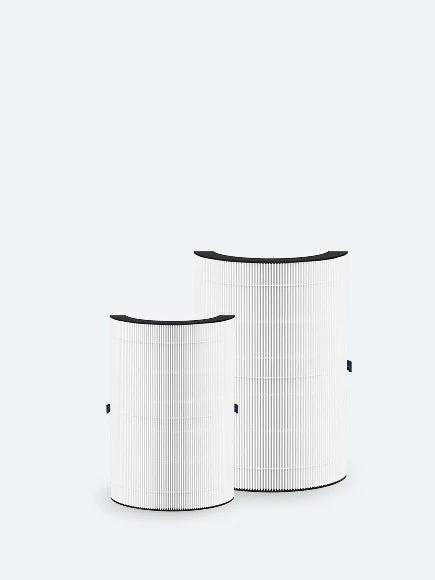
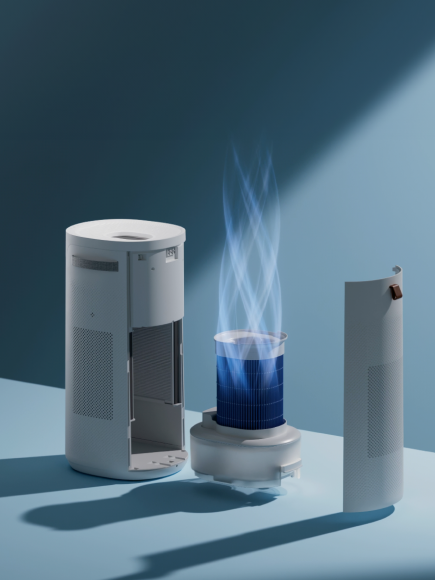
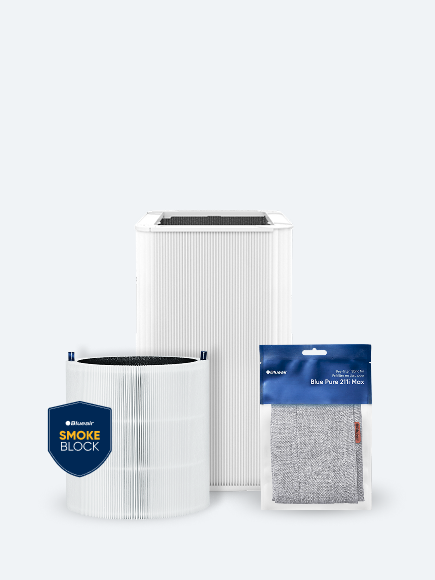
That is why removing pollen from indoor air makes such a noticeable difference, whatever the original source. Blueair purifiers use our proprietary HEPASilent™ technology, combining electrostatic and mechanical filtration to capture at least 99.97% of airborne particles down to 0.1 microns. Pollen grains are enormous by comparison, typically between 10 and 100 microns across, which means they are captured comfortably, along with the mould spores and fine dust that compound late summer symptoms.
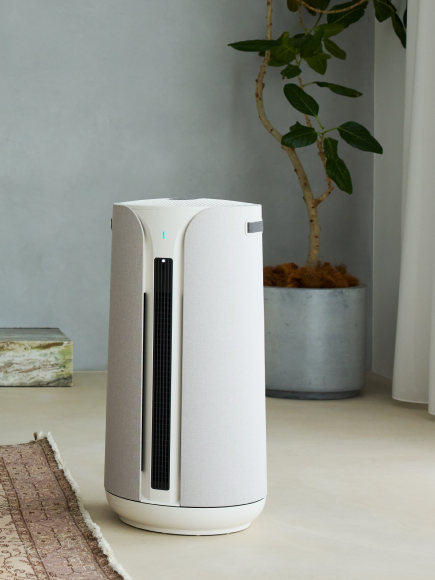
For open-plan living areas, larger sitting rooms and kitchen-diners, Blue Signature Large delivers greater air exchange across a bigger footprint, refreshing the air in rooms up to 65 m² roughly every 12 minutes. HEPASilent filtration works continuously in the background and its seven-stage filtration includes OdorFence™ technology, which tackles household odours and gases. Weighing just 6 kg it is light enough to move between rooms as the day moves with you.
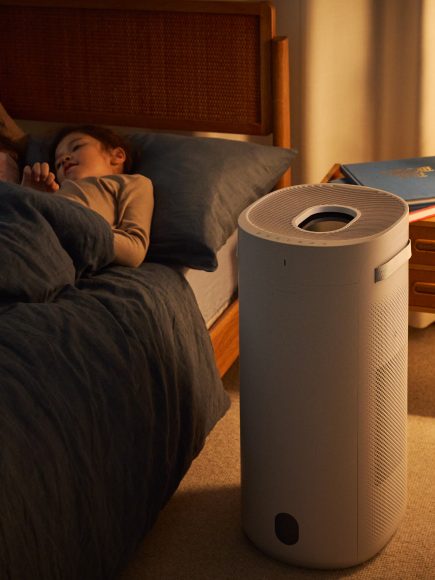
Designed for medium-sized rooms, Blue Signature Medium is the natural choice for a bedroom or home office. Featuring the same HEPASilent and OdorFence™ as the large, it is quiet enough to run all night without disturbing your sleep. That matters more than it sounds, because poor sleep amplifies daytime allergy symptoms considerably.
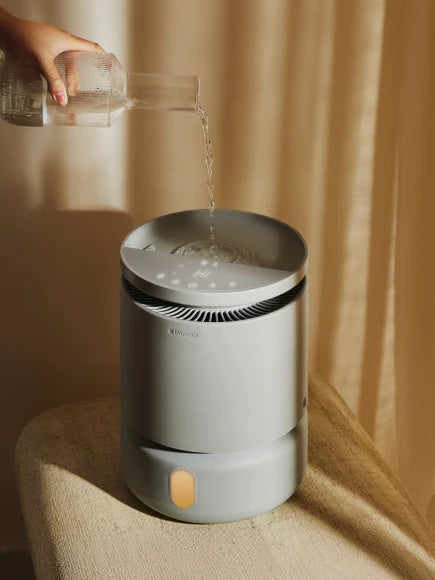
Compact enough for a bedside table, Mini Restful is built specifically for the bedroom. It is QuietMark certified at just 18 dB, quieter than a whisper, and covers rooms from 13 m² to 31 m². A sunrise alarm clock wakes you with gradually building light and gentle sound rather than a jarring alarm, which is a small change with an outsized effect during allergy season.

A flower pollen allergy is rarely as simple as the flowers being at fault. Once you know what you are actually reacting to, and you have genuinely clean air indoors, there is very little reason to keep the garden at arm's length.
Still working out which pollen is behind your symptoms? Read our complete guides to grass pollen allergies and tree pollen season.
Explore the full Blueair air purifier range to find the right purifier for every room in your home.