







Back to Blog
Grass Pollen Allergies: Your Complete Guide to Peak Hay Fever Season

Start shopping to qualify for free shipping!
This website uses cookies to improve your experience. By continuing to use our website you are consenting to our cookie policy.
If you start dreading the arrival of warm weather rather than welcoming it, you are far from alone. Around 16 million people in the UK suffer from hay fever, and of those, nine out of ten are specifically allergic to grass pollen. That makes grass pollen allergies the single biggest driver of hay fever misery in Britain, and with the peak season running from May through to July, it can feel like an entire summer’s worth of sneezing, itchy eyes and brain fog.
The good news is that understanding what you are up against, and taking the right steps can make a meaningful difference to how you feel. In this guide, we cover everything from what grass pollen is to some practical and effective coping strategies. Find out how to create cleaner indoor air which can provide genuine relief when pollen counts are at their worst.
Grass pollen comes from the tiny flowers of grass plants, of which there are around 150 species growing across the UK. Unlike tree or weed pollen, grass pollen grains are remarkably lightweight and travel freely on warm, dry breezes, meaning they can reach high concentrations in the air both in the countryside and in urban parks and gardens.
When someone with a sensitivity inhales grass pollen, their immune system mistakenly identifies the proteins within the pollen grain as a threat and mounts a defensive response. This triggers the release of histamine, which causes the familiar cascade of hay fever symptoms: sneezing, a runny or blocked nose, itchy and watery eyes, an itchy throat, and in some cases headaches, fatigue and a generalised sense of feeling unwell.
For those with asthma, grass pollen allergies carry additional risks, as pollen can worsen airway inflammation and trigger attacks.

Grass pollen season typically runs from mid to late-May until July, with two distinct peaks. The first and more intense peak usually falls in the first two weeks of June, while a second, lower peak follows in early July before levels gradually decline through August.
Weather plays a huge role too. Hot, dry, breezy days in the 18 to 28 degrees Celsius range produce the highest
grass pollen counts. Rain helps to wash pollen out of the air, particularly heavy morning rain, which can suppress counts for the rest of the day. Early mornings (from around 5am to 10am) and early evenings tend to have higher
concentrations as pollen rises and falls with the air temperature.
Grass pollen allergy symptoms range from mildly inconvenient to extremely disruptive. Common symptoms include:
If your symptoms tend to appear or worsen between May and July, and improve on rainy or damp days, grass pollen is almost certainly a significant factor.

You cannot control the air outside, but you can take meaningful control of the air inside your home. As 90% of our time is spent indoors and indoor air can be 5 times as polluted as indoor air. By introducing these four habits throughout the season, you can make a significant difference to the amount of pollen you are exposed to day-to-day.
Fresh air matters, but timing is everything during pollen season. Grass pollen counts are at their highest between mid-morning and early afternoon, particularly on warm, dry and breezy days. Opening windows during this window floods your home with the very particles you are trying to avoid.
Instead, ventilate strategically. Early mornings before 7am and later evenings after 8pm tend to have lower pollen concentrations, making these the ideal windows to open up the house and let fresh air circulate. Keep windows and doors closed during the middle part of the day on high-count days, and check the Met Office pollen forecast each morning so you know what you are working with.
An air purifier only works when it is running. During pollen season, the most effective approach is to keep your Blueair purifier on continuously rather than switching it on reactively when symptoms flare. Pollen accumulates gradually in indoor air, and running the purifier around the clock maintains a consistently low concentration rather than playing catch-up after levels have already built up.
Modern Blueair purifiers are designed for continuous use, with energy-efficient operation and quiet modes that mean round-the-clock running adds very little to your electricity bill and nothing to noise levels in your bedroom. Think of it as passive protection that is always working in the background.
Pollen travels indoors through open windows, on clothing and on the coats of pets. It settles on carpets, soft furnishings and bedding, meaning even time spent entirely indoors can result in ongoing low-level exposure. Vacuuming regularly with a HEPA-filtered vacuum, washing bedding frequently during the season and keeping pets groomed and wiped down after time outdoors all help to reduce the pollen load inside your home.
Every time you come in from outside during pollen season, you bring pollen with you. It clings to your hair, settles on your clothing and transfers to soft furnishings and bedding the moment you sit down or lie on the sofa. A quick shower and a change of clothes after any extended time outdoors removes the vast majority of that pollen before it can spread through your home.
This is especially important before bed. Showering in the evening during peak season ensures you are not spending eight hours with your face close to pollen that has transferred to your pillow, which is one of the most common causes of morning symptoms that carry through into the rest of the day.
There is no single silver bullet for grass pollen allergies, but combining several approaches consistently throughout the season makes a real difference.
The Met Office provides a daily pollen forecast across the UK, broken down by region. On days forecast as high or very high, plan outdoor activities accordingly, aiming for early morning, after rain or later in the evening when counts tend to drop. Many weather apps now include pollen as a standard metric alongside temperature and UV index.
On high pollen days, avoid mowing the lawn or sitting in grassy parks during the middle of the day when counts peak. Wear wraparound sunglasses to shield your eyes when outdoors, and plan any physical exercise for early morning or evening rather than during the highest-count hours of the day.
For moderate to severe grass pollen allergies, over-the-counter antihistamines, nasal corticosteroid sprays and antihistamine eye drops form the mainstay of self-management. For persistent or severe symptoms, a GP can prescribe stronger treatments or refer you for allergen immunotherapy, which can help desensitise your immune response over time.

Choosing the right purifier for your home comes down to matching the unit’s coverage capacity to the size of the room where you spend the most time. For most hay fever sufferers, the priority spaces are the bedroom (for a restful, symptom-free night’s sleep) and the main living area.
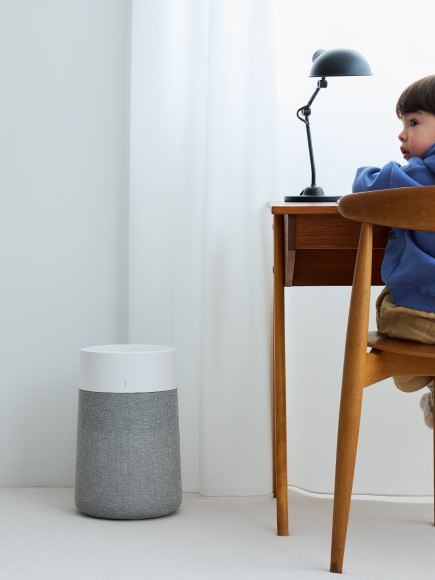
Blue Signature Medium is designed for medium-sized rooms and is the ideal choice for a bedroom or home office. Its HEPASilent filtration continuously removes pollen, dust and other allergens from the air, while its quiet operation means it can run all night without disturbing your work or your sleep. Uninterrupted sleep is particularly important for allergy sufferers, as fatigue from poor sleep compounds daytime symptoms significantly.
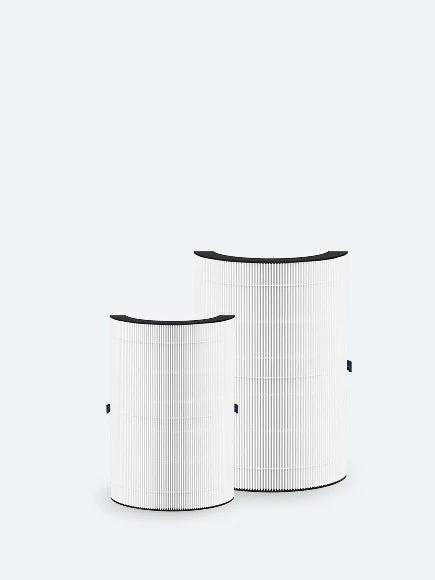
Blue Signature Medium is straightforward to use, with intuitive controls and filter replacement reminders, making it easy to stay on top of maintenance through the season.
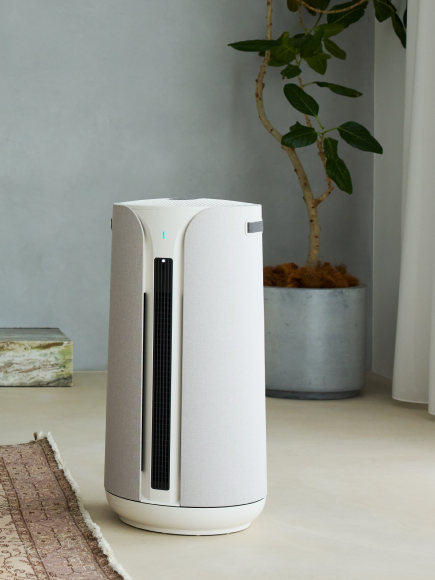
For open-plan living spaces, larger sitting rooms or kitchen-dining areas, Blue Signature Large delivers greater air exchange capacity across a bigger footprint. Running a purifier in the main living space during the day means the room where you spend most of your waking hours is continuously cleaned of pollen and other airborne particles.
Blue Signature Large is particularly worth considering for families where multiple people have grass pollen allergies, as the higher CADR means it turns the air over more frequently, maintaining lower allergen levels even as windows may occasionally be opened briefly for ventilation.
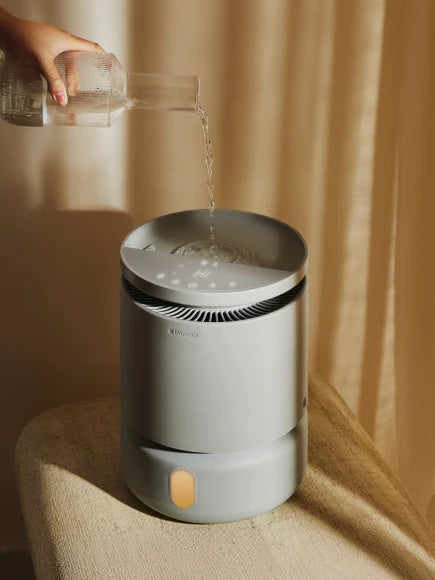
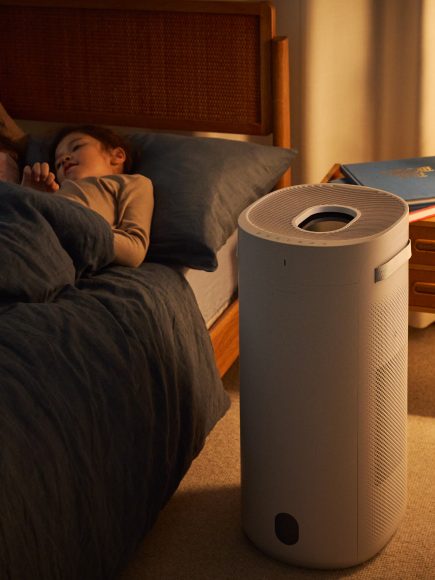
The Mini Restful is specifically designed with sleep in mind. Compact enough to sit on a bedside table, it features an ultra-quiet sleep mode and a soft night light, making it ideal for keeping on through the night without interruption. For many allergy sufferers, the bedroom is where symptoms have the most impact, either because of pollen brought in on clothing or hair before bed, or because morning symptoms triggered by accumulated overnight particles disrupt the start of the day.
Running the Mini Restful in your bedroom every night throughout the pollen season creates a low-allergen sleep environment, which can be genuinely transformative for sleep quality and how you feel the following morning.
The most effective approach to managing grass pollen allergies combines sensible outdoor habits with a genuinely low-pollen indoor environment. Here is a simple seasonal routine to build on:
Explore the full Blueair air purifier range to find the perfect purifier for every room in your home.